
Thermocouples
-500x500w.jpg)
-500x500w.jpg)
-500x500w.jpg)
-500x500w.jpg)
-500x500w.gif)
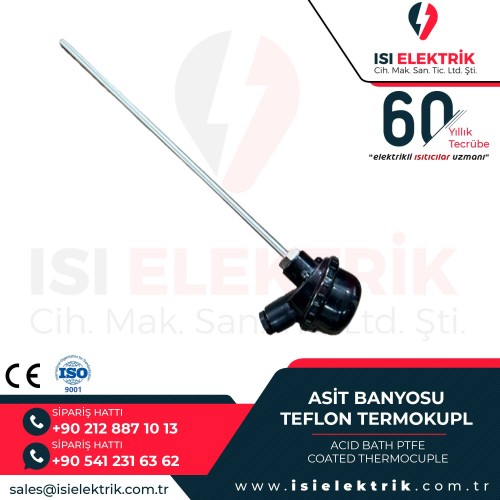
Thermocouples
.jpg)
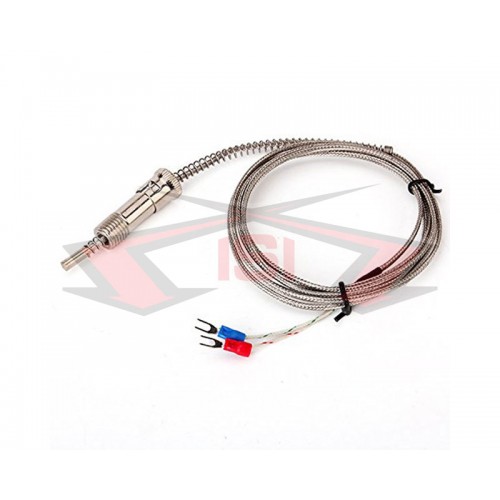
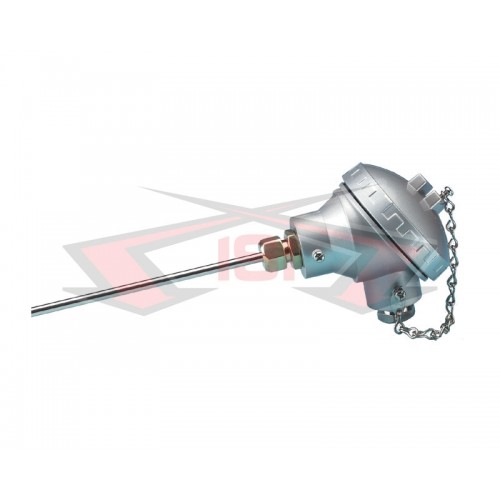
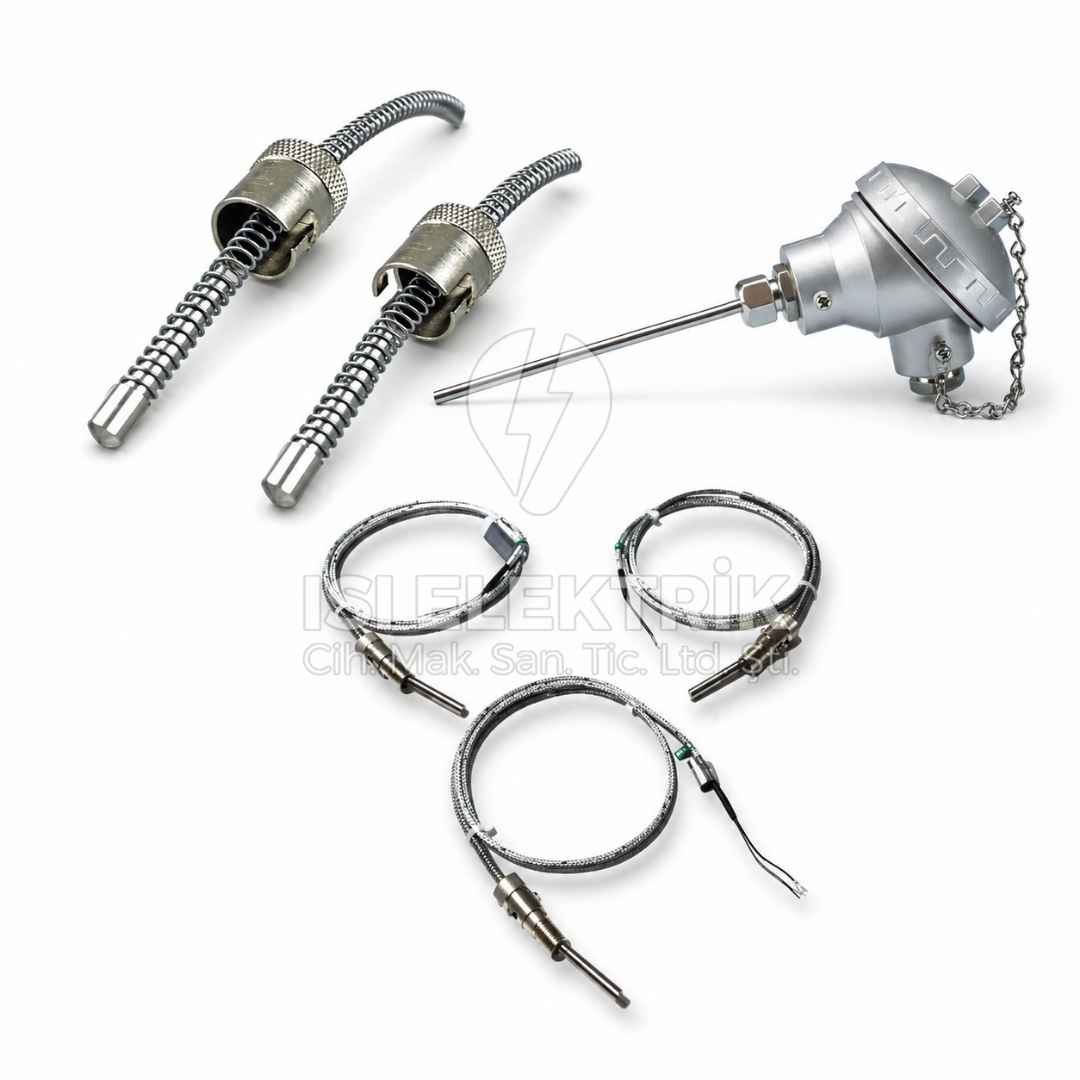
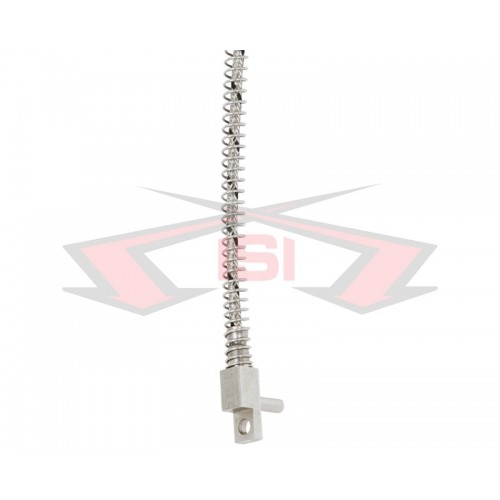
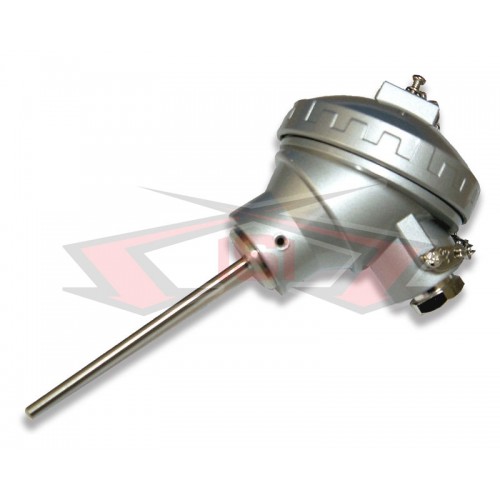
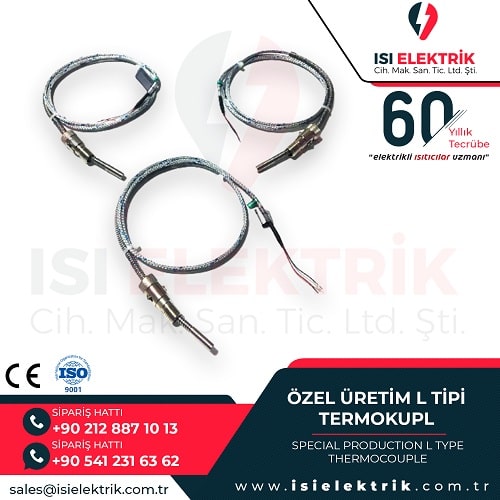
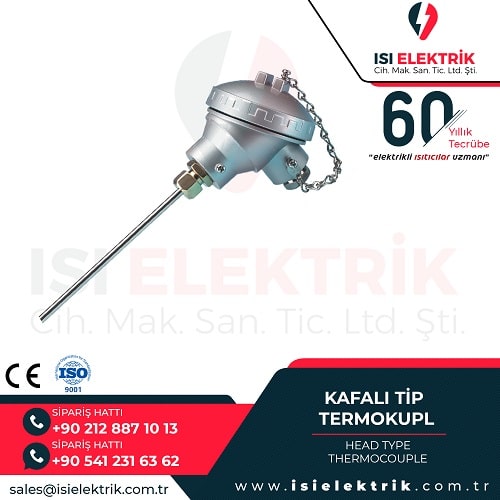
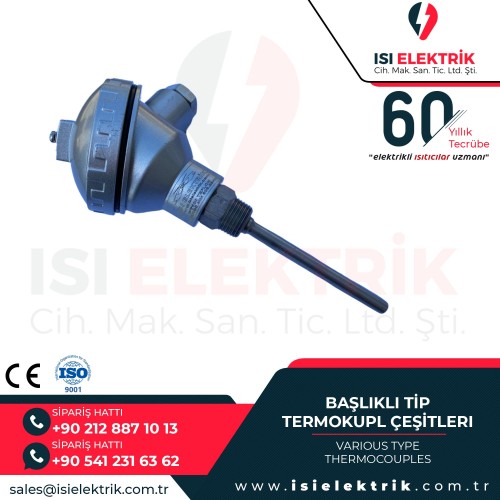
Thermocouples are among the most widely used temperature measurement components in industrial processes. Based on the thermoelectric voltage generated at the junction of two dissimilar metals, they are used to monitor, control and protect temperature-sensitive systems in a broad range of industrial environments. From furnaces and heat treatment lines to plastic processing equipment, molds, hot runner systems, food machinery and process heating assemblies, thermocouples play a direct role in process stability, product quality and equipment safety.
In industrial applications, selecting the right thermocouple is not only about choosing a sensor type. It also requires evaluating sensor dimensions, tip structure, sheath material, cable design, mounting form, environmental conditions and compatibility with the connected control system. An incorrect choice may result in unstable readings, process deviation, product inconsistency, overheating risks and unplanned downtime. For that reason, thermocouples should be treated as process-critical technical components rather than simple accessories.
With a manufacturing background dating back to 01.01.1960 and more than 65 years of industry experience, Isı Elektrik Rezistans combines production capability with engineering-based technical evaluation. In standard and custom temperature measurement applications, project-specific manufacturing, engineering support and technical consultancy can make a significant difference in long-term system performance.
What Is a Thermocouple?
A thermocouple is a temperature sensor formed by joining two dissimilar metallic conductors. When the sensing junction is exposed to heat, a measurable thermoelectric signal is generated and interpreted by a controller, indicator or automation system as temperature information. This principle has been used in industry for many years because it offers practical integration, reliable operation and a wide range of application possibilities.
Thermocouples are commonly preferred in systems involving elevated temperatures, but they are not limited to high-temperature duty alone. They can also be used for general process monitoring, mold temperature measurement, air and gas temperature observation, immersion measurement, machine-integrated sensing and surface temperature control. This flexibility makes them one of the most widely applied industrial temperature sensors in manufacturing environments.
How Do Thermocouples Work?
The operating principle of a thermocouple is based on the electrical potential created when two different metallic materials are joined and exposed to temperature. In practical industrial use, this means that the sensing tip converts thermal exposure into a low-level signal. A compatible controller or measurement device then translates this signal into a readable temperature value.
For reliable performance, the thermocouple should not be evaluated only by its sensing junction. The full measurement chain matters, including the extension or compensation cable, terminal arrangement, connection head, mounting logic and the measuring or control instrument used in the system. A mismatch anywhere in this chain may reduce reading quality and process reliability.
The full measuring structure often includes:
- The sensing junction and its contact with the process
- The protective sheath or sensor body
- The connection cable or compensation line
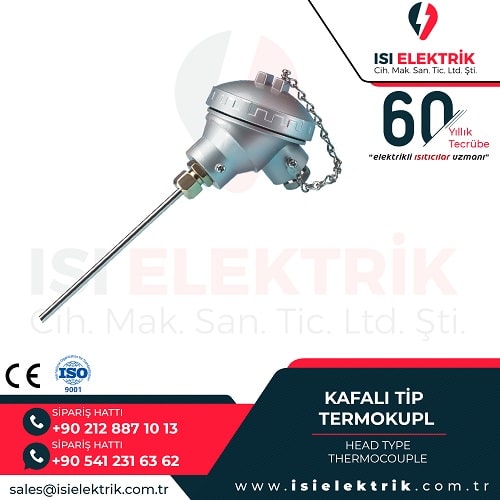
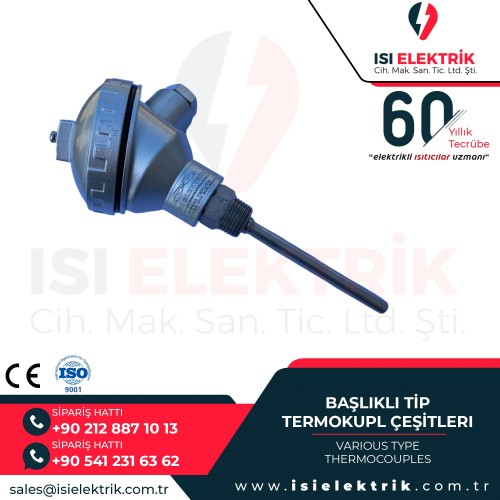
- The terminal or head assembly
- The controller, indicator or PLC input
- Mounting components and process connection parts
For this reason, a thermocouple should always be selected together with the application and not as an isolated part number.
Technical Structure of Thermocouples
The technical structure of thermocouples varies depending on application conditions. At the core, the sensor is created by joining two dissimilar conductors at the measuring point. However, industrial use typically requires additional elements such as metallic sheaths, insulating components, compression fittings, terminal heads, protective tubes and connection systems that make the sensor suitable for the actual environment.
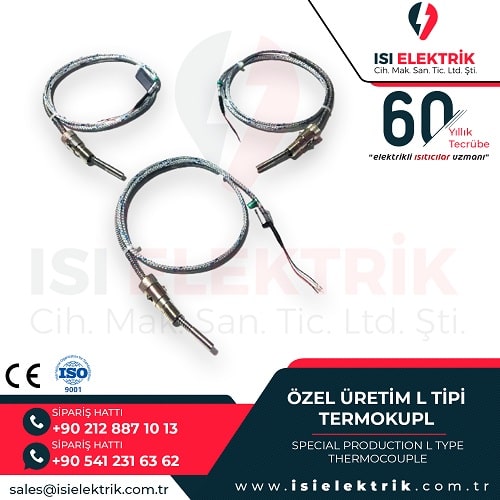
In practice, thermocouples can be manufactured in different forms such as probe type, threaded type, bayonet type, flanged type, surface type, immersion type or compact cable type assemblies. The correct structure depends on where the temperature needs to be measured and how the sensor must be mounted. A thermocouple used in a furnace does not require the same body design as one used on a mold surface or inside a hot runner system.
The sheath and tip design affect both mechanical durability and response time. A heavier protective design may improve durability, while a slimmer design may offer faster response. The right balance depends on process expectations.
Thermocouple Types and Selection Logic
Several thermocouple types are used in industry. Frequently encountered options include Type K, Type J, Type T, Type N and other types preferred in more specific temperature environments. Each type has its own material combination, behavior and application suitability. For this reason, it is not enough to specify only “thermocouple”; the correct sensor type must match the process requirements.
During selection, the following questions should usually be considered:
- What is the required temperature range?
- Will the sensor be exposed to vibration, humidity, oxidation or chemicals?
- Is fast response or high mechanical durability more important?
- Will the sensor operate continuously or intermittently?
- How will it be mounted?
- Which sensor type is supported by the control system?
An incorrect type choice may allow the sensor to survive physically while still delivering poor measurement performance. That is why correct thermocouple type selection is a key factor in process reliability.
Applications and Process Diversity
Thermocouples are used in a very broad range of applications wherever temperature monitoring is essential. They are commonly found in furnaces, industrial heating systems, molds, production lines, drying equipment, hot air systems, tanks, machine bodies and metal processing operations. The main purpose is always the same: to observe and communicate temperature in a way that supports process control.
Typical application areas include:
- Furnace temperature measurement
- Monitoring in electric heating systems
- Plastic injection and extruder processes
- Mold and hot runner temperature control
- Food machinery temperature monitoring
- Glass and heat treatment process control
- Textile machinery temperature observation
- Chemical tanks and process line measurement
- Metal and machinery temperature supervision
- Medical and precision production environments
This wide range of use shows that thermocouples should be considered as flexible technical measurement solutions rather than standard generic parts.
In Which Industries Are Thermocouples Used?
Thermocouples are used in automotive, glass, defense, food, medical, chemical, textile, aviation, metal and machinery, aluminum extrusion, annealing furnaces, heat treatment furnaces, melting furnaces, tempering furnaces, plastics, injection molding machines, extruders, hot runner systems, plastic molds, thermoforming lines and household appliance production. In each of these sectors, the operating conditions and performance expectations differ, but the common requirement is reliable and controlled temperature measurement.
For example, in the plastics industry, nozzle and mold temperature directly affect product quality. In glass and furnace systems, stable process measurement is essential. In food production, consistent heat monitoring helps maintain process balance. In chemical and medical applications, environmental compatibility and material suitability are often just as important as the measurement itself.
Dimensions and Size Options
Dimensions are as important as sensor type in thermocouple selection. The available space, insertion depth, contact point, process flow and mounting geometry all affect what size should be chosen. Thermocouple sizing is generally evaluated through diameter, overall length, immersion length, active tip section, cable length and mounting component dimensions.
The following variables may become critical depending on the application:
- Diameter and sheath thickness
- Total length and insertion depth
- Cable length and connection distance
- Thread or fitting size
- Tip form and contact geometry
- Head or terminal body size
Slim sensors used in narrow spaces may provide faster response, while more robust sheath constructions may be preferred in mechanically demanding areas. Similarly, a tank application requiring long immersion depth should not be designed with the same dimensional logic as a surface sensing point. This is why custom thermocouple manufacturing is often necessary in industrial projects.
Tip Structure, Form Options and Mounting Styles
The tip structure of a thermocouple should be selected according to where and how the sensor will be used. Contact tips, immersion tips, surface sensing tips, threaded assemblies, spring-loaded systems and bayonet configurations all respond to different installation needs. The goal is to ensure proper contact with the measurement zone while maintaining mechanical safety.
Typical mounting approaches may include:
- Threaded mounting for fixed process installation
- Bayonet mounting for molds and machinery
- Flanged assemblies for larger process equipment
- Head-mounted structures for industrial field use
- Compact cable sensors for limited spaces
- Protected sheath designs for demanding environments
If the wrong mounting structure is used, the sensor may not contact the real process point correctly. This can reduce reading quality and lead to looseness, vibration-related errors or unstable measurement. Mounting style is therefore a direct part of thermocouple performance.
Temperature Conditions and Application-Dependent Requirements
Temperature conditions are among the main selection criteria for thermocouples. However, maximum temperature alone is not enough. Continuous operating temperature, sudden changes, thermal shock possibility, process stability and environmental exposure must also be evaluated. Some applications require high-temperature durability, while others need a narrower but more controlled operating range.
When the title does not imply a fixed set of technical values, the correct engineering approach is to define the sensor according to the application. A furnace atmosphere, a hot runner manifold, an immersion tank, an air measurement point and a metal surface do not create the same working conditions. The sensor type and body structure should therefore be selected according to the real temperature environment.
Material Structure and Durability
Material structure has a direct impact on service life and measurement stability. The outer sheath, internal insulation, junction quality, cable design and protective accessories must withstand not only temperature but also the mechanical and environmental conditions of the process. Moisture, dust, vibration and chemical exposure can all shorten the life of a poorly matched sensor.
Durability evaluation typically includes:
- Mechanical shock and vibration resistance
- Oxidation and environmental resistance
- Cable insulation suitability
- Terminal or head protection
- Continuous duty compatibility
- Maintenance and replacement practicality
From a manufacturing perspective, it is important not only to produce a sensor, but to shape the sensor according to the environment in which it will work. This reduces unnecessary failure risk and supports more stable process management.
Performance, Response Time and Measurement Efficiency
Performance in thermocouples is not only about surviving temperature. It also includes how quickly the sensor responds and how stable the reading remains over time. Slimmer and more direct-contact designs may offer faster response, while stronger protected designs may provide longer service life. The correct balance depends on what the application values most.
Measurement efficiency depends on whether the sensor is installed at the correct point and in the correct way. Even if the sensor seems technically suitable, it may fail to provide useful process data when mounted at the wrong location. This makes positioning just as important as sensor construction.
Energy Efficiency and Business Impact
A thermocouple does not generate heat directly, but it has a strong indirect effect on energy efficiency. A heating system that operates without reliable temperature feedback often consumes more energy than necessary or fails to maintain the required setpoint consistently. This can lead to both quality problems and higher energy costs.
With a correctly selected and correctly positioned thermocouple:
- The heating system can operate with better control
- The risk of unnecessary overheating is reduced
- Process repeatability improves
- Energy consumption is managed more consistently
- The risk of product quality deviation decreases
- Maintenance and downtime costs may be reduced
For this reason, thermocouple selection should be considered part of process optimization, not simply component purchasing.
Installation and Integration Considerations
Installation and integration are as important as sensor quality. Even the correct thermocouple type may perform poorly if insertion depth is wrong, contact is weak, wiring is loose or the controller is not properly matched. Before ordering, it should be clear where the sensor will be installed, how it will be mounted and how it will connect to the system.
Technical integration usually includes:
- Connection method and terminal arrangement
- Cable routing and environmental protection
- Controller compatibility
- Insertion depth and measurement point definition
- Maintenance accessibility
- Ease of replacement
In systems where downtime is critical, a sensor that is designed for easy maintenance and quick replacement can provide significant operational advantage.
Project-Specific Manufacturing Options
In many industrial systems, standard thermocouples are not enough. In those cases, project-specific thermocouple manufacturing becomes necessary. Different lengths, custom process connections, special cable structures, unique tip forms, compact assemblies, head-mounted bodies and protective sheath adaptations can all be designed according to the project.
Custom manufacturing may include:
- Special diameter and length options
- Custom fittings or threaded connections
- Different head or cable outlet designs
- Protective sheath or tube adaptations
- Application-specific tip geometry
- Machine-compatible mounting solutions
One of the main advantages of working with a manufacturer is that these technical requirements can be translated directly into the production stage. This is particularly valuable in non-standard equipment and custom process systems.
Technical Review Before Ordering
Correct thermocouple selection requires clarifying certain technical details before ordering. The more accurately these details are provided, the more reliable and efficient the selected sensor will be. In B2B projects, this planning stage also reduces later revision costs.
The following information is generally helpful:
- A short description of the application
- The nature of the measured medium
- The expected temperature range
- The mounting method and installation dimensions
- The required sensor length and cable length
- The controller or automation system details
- Whether the system runs continuously or intermittently
- Whether there is humidity, vibration, chemicals or dust in the area
This technical preparation improves both production accuracy and field performance.
Differences from Similar Products
Thermocouples are temperature measurement devices and should not be grouped with products that generate heat directly. They also differ from other temperature sensor technologies. In some applications, RTDs or other sensor types may be considered, but thermocouples remain highly valuable because of their wide industrial compatibility and suitability for many demanding processes.
The main differences involve sensing principle, temperature suitability, mechanical structure and behavior under process conditions. This is why the idea that every temperature sensor can be used for every job is not technically correct. The correct sensor family should match the correct process.
How Incorrect Selection Affects Production
An incorrect thermocouple selection may seem like a small detail at first, but it can create major production problems. Inaccurate measurement can cause heaters to operate incorrectly, increase process times, reduce quality consistency and raise energy consumption. If the sensor is not suitable for the environment, early failure and unplanned downtime may also occur.
Incorrect selection may result in:
- Incorrect process temperature readings
- Product quality fluctuations
- Higher energy consumption
- Equipment safety risks
- Unplanned maintenance and production loss
- Repeat manufacturing and revision needs
For that reason, the technical selection stage should be planned correctly from the beginning.
The Advantages of Working with a Manufacturer
Working directly with a manufacturer is especially advantageous in thermocouple projects requiring special dimensions or non-standard configurations. A manufacturer understands not only catalog information, but also real production details, material options, installation limits and application risks. This allows for more accurate guidance and better-matched solutions.
Isı Elektrik Rezistans supports industrial temperature measurement needs through custom manufacturing, project-based production, engineering support and technical consultancy. In processes where temperature measurement is critical, defining the most suitable sensor structure helps improve process quality and system safety.
Thermocouples
Thermocouples are essential components of industrial temperature control. When the correct sensor type, suitable dimensions, appropriate material structure, proper mounting and system compatibility are all achieved together, thermocouples do more than provide temperature data. They also contribute to process stability, energy efficiency, quality consistency and equipment protection. For this reason, thermocouple selection should be treated as an engineering decision rather than a simple spare-parts choice.
With more than 65 years of sector experience and a manufacturer-oriented perspective, Isı Elektrik Rezistans offers the production capability and technical approach needed to support both standard and project-specific temperature measurement applications. In B2B environments especially, selecting the right sensor helps the production line operate in a more controlled and more efficient way.
Frequently Asked Questions
1. What is a thermocouple used for?
A thermocouple is used to measure temperature and transmit that information to a control system. It is one of the fundamental sensors in industrial process monitoring.
2. In which industries are thermocouples used?
They are used in plastics, automotive, food, glass, textile, chemical, metal, medical, defense and furnace-related applications, among many others.
3. What is the difference between Type K and other thermocouple types?
Each thermocouple type has a different material combination and operating behavior. The correct type should be selected according to the temperature range and process conditions.
4. Why are dimensions important in thermocouples?
Diameter, length, immersion depth and cable length affect whether the sensor can measure the correct point properly and reliably.
5. Is a thermocouple the same as an RTD?
No. Both are temperature sensors, but their operating principles and preferred applications are different. The right choice depends on the process.
6. Is custom thermocouple manufacturing possible?
Yes. Custom length, tip structure, connection type and cable design can be produced according to the application requirements.
7. Why does thermocouple response time vary?
Response time is influenced by tip structure, diameter, sheath thickness and the way the sensor contacts the measurement point.
8. What information should be shared when selecting a thermocouple?
The application description, temperature range, mounting method, sensor length, cable length, environmental conditions and controller details should be provided.
9. What can happen if the wrong thermocouple is selected?
It may cause inaccurate readings, quality loss, higher energy use, unplanned downtime and equipment safety issues.
10. Why is it advantageous to work with a manufacturer?
A manufacturer can provide better support for custom sizing, technical consultancy, project compatibility and material selection based on the real application.
Thermocouples | Industrial Temperature Measurement | Isı Elektrik Rezistans