
Heat Tapes
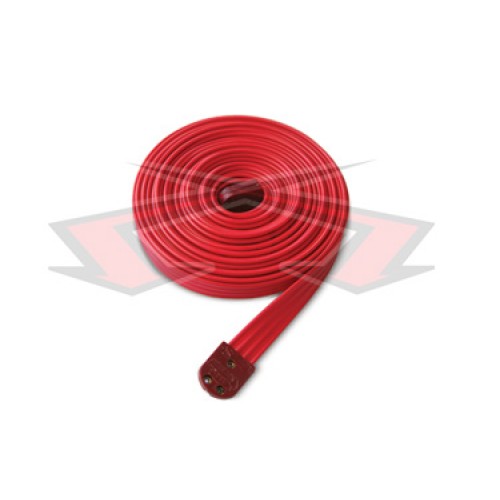
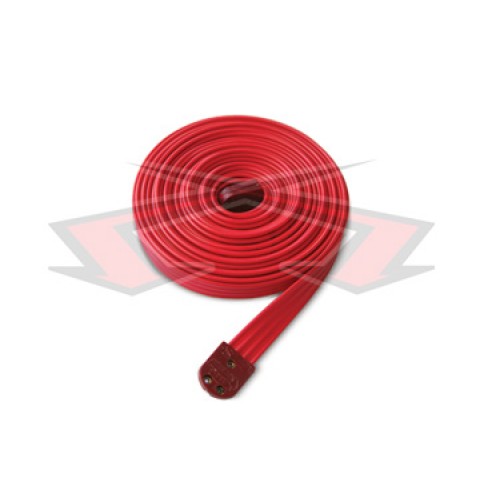 Heat Tapes
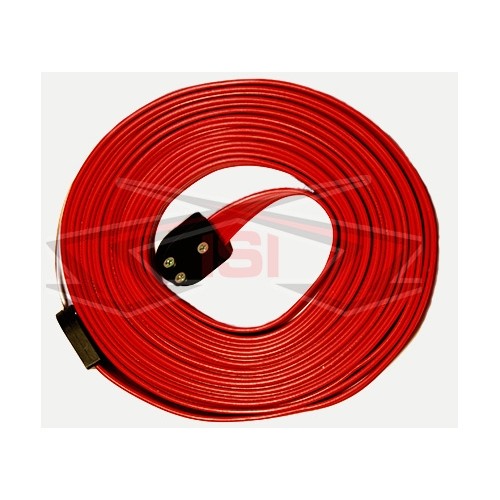
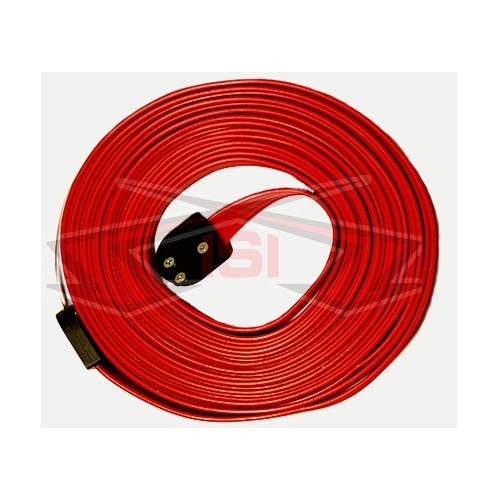 Heat Tapes
Band Heaters
Band heaters are widely used industrial heating elements designed for controlled external heating of cylindrical or partially curved metal surfaces. They are commonly installed around machine barrels, nozzles, process bodies, and metallic sections that must operate within a specific temperature range. In injection molding systems, extruder lines, packaging machinery, polymer processing equipment, and a variety of industrial process units, band heaters play a critical role in maintaining thermal balance. When selected correctly, they support temperature stability, process continuity, production consistency, and more predictable energy control. When selected incorrectly, they may cause uneven heat distribution, unnecessary energy loss, hot and cold spots on the heated surface, unstable production quality, and shorter service life for both the heater and the equipment.
For that reason, band heaters should never be treated as simple spare parts. They are functional thermal components that directly influence process behavior, surface temperature distribution, and long-term production stability. This is where the manufacturing approach of Isı Elektrik Rezistans becomes especially relevant. In this product group, a technically reliable decision requires the combined evaluation of diameter, width, load density, connection structure, terminal position, insulation type, and real operating conditions. Standard products are sufficient for many systems, yet a significant portion of industrial applications require custom manufacturing and project-based engineering review.
What Are Band Heaters?
Band heaters are external surface heating elements designed to wrap around or closely contact a machine or process body. Their main purpose is to heat or maintain the temperature of cylindrical or specially shaped components before or during operation. Instead of heating a fluid or an internal block directly, they transfer heat through surface contact from the outside.
These products are not limited to a single technical structure. Depending on the process requirement, different constructions may be preferred for compact use, balanced heat transfer, higher temperature tolerance, or better mechanical integration. In other words, “band heater” is a broad industrial product category shaped by the actual needs of the application.
Technical Structure
The technical structure of a band heater generally includes a resistance element, an electrical insulation layer, a protective outer body, and connection points. The design objective is not only to generate heat, but to transfer that heat to the contact surface in a controlled, balanced, and application-appropriate way.
The internal resistance element is designed according to the required wattage. The insulation structure affects electrical safety and thermal consistency. The outer shell provides mechanical integrity and helps the heater maintain proper contact pressure on the machine surface. Depending on the application, the heater may include bolted tightening mechanisms, spring-based fastening, plug-in connections, cable leads, terminal boxes, or custom electrical exits.
Thanks to this structure, a band heater forms a defined heating zone on the machine or process body. In continuous production environments, stable surface temperature can directly affect material flow behavior, melting characteristics, and process repeatability. This makes structural design just as important as nominal power rating.
Working Principle
The working principle of band heaters is based on electrical resistance heating. When current passes through the resistance element, heat is generated and transferred through the heater body to the outer metal surface and then to the mounted machine component. The real objective is not simply high temperature, but balanced, controlled, and application-specific heat transfer.
If the heater does not fit the surface properly, if a gap exists between the heater and the machine body, or if the selected diameter is incorrect, heat transfer efficiency can drop significantly. In that case, even a heater with the correct nominal power may fail to deliver the expected field performance. For this reason, the operating principle depends on both electrical design and mechanical compatibility.
Where Are Band Heaters Used?
Band heaters are used in many industrial systems that require controlled external surface heating. Common applications include plastic processing machines, injection molding machinery, extruder systems, barrel heating zones, nozzle areas, feeding sections, packaging machines, chemical process units, and machines with metal surfaces that must remain within a defined temperature range.
In polymer and plastic processes, material flow, melting behavior, and forming stability are highly sensitive to temperature. For that reason, the heat profile created by band heaters around a barrel or cylindrical body is critical not only for thermal input but also for production quality. Likewise, in selected chemical systems or process lines where material behavior is temperature-dependent, external surface heating becomes a necessary part of operational control.
Industrial Sectors
This product group has a clear place in many of the industries served by Isı Elektrik Rezistans. It is especially relevant in plastics, injection machinery, extruder lines, hot runner systems, thermoforming, and household appliance manufacturing. It can also be used in selected applications across automotive, metal and machinery, food, chemical processing, textile, medical manufacturing, and certain auxiliary production environments.
Each industry has different expectations. Some demand fast thermal response, while others prioritize long-term stability, compact installation, or easier maintenance. That is why products described under the same general name can have very different technical configurations in practice.
Dimensions, Diameter, and Form Options
Dimension selection is one of the key factors that determine band heater performance. Technical evaluation should include not only general diameter, but also inner diameter, width, thickness, heated zone length, unheated sections, sensor openings, and terminal location.
In cylindrical applications, the inner diameter must match the heated surface accurately. A loose fit weakens thermal contact, while an overly tight fit may create installation difficulties or distortion. Width selection affects the available heat transfer area. Narrow heaters can be suitable for localized zones, while wider designs may create a more balanced thermal profile over a broader area.
Depending on the machine layout, full circular forms, half-circle structures, split segments, or specially shaped designs may be required. Some machines also need sensor slots, bolt clearances, nozzle passages, or customized cut-out sections. This is where custom dimensions become essential.
How Should Wattage and Voltage Be Selected?
Watt and voltage selection directly affect the field performance of a band heater. The required power should be defined not only according to the machine size, but also based on target temperature, heat-up time, body material, thermal losses, insulation conditions, ambient environment, and whether the process runs continuously or intermittently.
Higher wattage does not automatically mean better performance. If power density is too high for the application, the result may be unnecessary thermal stress, more difficult temperature control, and local overheating. If power is too low, the system may respond slowly, show unstable thermal behavior, and create inconsistency in production output.
Voltage selection should match the electrical infrastructure of the facility. Single-phase or three-phase configuration must be considered together with total power demand and control panel design. Before ordering, it is important to define not only diameter and width, but also supply voltage, connection structure, and the intended control scenario.
Temperature Values and Operating Conditions
Temperature capability in band heaters depends on product construction, insulation design, body material, surface contact quality, and control method. A key technical point is that the internal thermal tolerance of the heater is not the same as the required operating surface temperature of the process.
Some applications only need moderate surface temperatures, while others require higher thermal levels. However, the correct value should always be defined according to the processed material, surface structure, duty cycle, and control sensitivity. For that reason, giving one fixed temperature figure based only on a product name would not be technically accurate. The correct approach is to define the process temperature requirement and then select the appropriate heater structure accordingly.
Material Structure and Durability
Material structure affects both service life and operating stability. The metal outer body, the quality of the connection parts, the insulation layer, and the way terminal sections are protected should all be evaluated together. The heater must not only generate heat, but also maintain thermal performance safely through repeated operating cycles.
Major durability risks include loose surface contact, poor installation, contaminated mounting surfaces, distortion, excessive tightening, incorrect power selection, and long periods of uncontrolled operation. If the heater does not sit properly on the surface, heat transfer becomes uneven. This reduces performance and may place unnecessary thermal load on specific areas of the heater.
In continuous production lines, service life is influenced not only by original manufacturing quality but also by maintenance procedures, removal and reinstallation habits, and overall operating discipline.
Performance, Efficiency, and Energy Use
Efficiency in band heaters does not simply mean low power consumption. Real efficiency means delivering the required heat to the correct zone, within the correct time frame, and without avoidable thermal losses. If the diameter does not match the surface, if the mounting face is dirty, or if the control system is inadequate, the expected performance may not be achieved even with high wattage.
A properly performing band heater system helps the process reach target temperature more predictably. This supports operational continuity, can reduce fluctuations in production quality, and makes maintenance planning easier to manage. In serial manufacturing environments, stable thermal behavior may also influence scrap rates and process repeatability.
- More balanced surface temperature
- Controlled heat distribution on the machine body
- Support for process consistency
- Reduced unnecessary heat loss
- More stable operation with the right control system
Installation and Integration
Installation is a direct part of band heater performance. The heater must fit the surface correctly, tightening components must be adjusted appropriately, and terminal areas must be protected against mechanical stress. If the heater operates on a machine that requires repeated removal and reinstallation, maintenance accessibility should also be considered during design.
On the integration side, thermocouples, sensors, thermostats, panel controls, SSR-based driving, and automation logic all become relevant. Physical size alone is not enough. The system must also define how temperature will be controlled, where the feedback signal will be taken from, and what type of protection will be used against overheating.
Some applications require sensor-slot or sensor-pass designs, while others demand a specific lead exit direction to match the machine structure. When these installation details are defined before manufacturing, field mismatch risk is greatly reduced.
Custom Manufacturing Options
Standard products are not always sufficient in industrial machinery and process equipment. Legacy machines, retrofit projects, space-restricted systems, and special production lines often require non-standard diameters or widths. Additional needs may include cut-outs, sensor openings, segmented structures, special terminal positions, or adjusted power distribution.
This is where custom manufacturing creates value. The manufacturer identity of Isı Elektrik Rezistans, combined with engineering support, provides more than simple product supply. It enables the development of application-specific technical solutions. For maintenance teams, buyers, engineers, and project managers, this means a more reliable procurement path and a higher chance of long-term compatibility with the actual process.
Differences from Similar Heating Products
Band heaters are sometimes confused with cartridge heaters, tubular heaters, plate heaters, or silicone heating solutions. However, their operating geometry and intended heat transfer method are different. Band heaters are particularly suitable for circumferential or zonal external heating of curved surfaces. Cartridge heaters are usually inserted into drilled holes for block heating. Tubular heaters are more versatile for liquid, air, or formed applications. Plate structures are suited to flat surfaces, while silicone solutions may serve lighter and more flexible needs.
For that reason, product selection should not be based only on the question of which component creates heat. It should also be based on where the heat is delivered, how it is delivered, and what surface geometry the application requires.
Effects of Incorrect Product Selection
Incorrect diameter, incorrect width, unsuitable power density, or poor installation details can lead to process instability, insufficient heating, uneven thermal profiles, localized machine body overheating, and avoidable energy losses. In temperature-sensitive processes such as plastic processing, even small thermal inconsistencies may influence material flow and product quality.
Incorrect selection can also increase maintenance frequency. Repeated failure, loosening, poor fit, or excessive strain at the terminal section can negatively affect production continuity over time. For that reason, the decision should not be based only on initial purchase cost, but on the overall operational effect.
Technical Details for Long Service Life
Long service life depends not only on product design but also on installation discipline and control quality. Clean mounting surfaces, correct diameter selection, regular connection checks, and stable temperature management all contribute to longer and more reliable performance.
- The mounting surface should be cleaned before installation.
- No gap should remain between the heater and the machine body.
- Bolts and terminals should be checked periodically.
- Excessive thermal loading should be avoided.
- Sensors and control systems should be reviewed regularly.
- Care should be taken to avoid deformation during removal and reinstallation.
Which Technical Information Should Be Shared Before Ordering?
For reliable product selection, the following information should be shared as clearly as possible before order placement:
- Diameter of the heated surface
- Required heater width
- Total power requirement
- Supply voltage
- Operating temperature range
- Machine or process type
- Connection style and terminal direction
- Any sensor opening or custom cut-out requirement
- Continuous or intermittent duty information
- Photo, drawing, or dimensions of the existing part if available
Advantages of Working with a Manufacturer
For application-sensitive products such as band heaters, working with a manufacturer means more than buying a part. It also means access to technical suitability checks, dimension confirmation, connection evaluation, and revision suggestions when needed. This reduces the risk of trial-and-error in the field.
The 65+ years of experience of Isı Elektrik Rezistans, its manufacturer identity, custom production capability, and technical support approach offer real value especially in project-based or special-size work. The real advantage is not only production capacity, but the ability to understand the field requirement and shape a technically appropriate solution around it.
Band Heaters
Band heaters are critical components in many industrial systems where temperature must be controlled consistently. When used correctly, they support machine performance, thermal continuity, and operational reliability. However, reliable results require the combined evaluation of diameter, width, wattage, voltage, mounting structure, temperature expectation, and control method.
For that reason, selecting a band heater should not be treated as a simple spare part decision. For industrial companies, maintenance teams, engineers, and procurement professionals, the most effective approach is to define the application technically, select the right product for that application, and develop a custom solution with manufacturer support whenever necessary. That is how a truly technical, product-focused, and long-lasting solution is built.
Frequently Asked Questions
1. What do band heaters do?
They provide controlled external heating of cylindrical or specially shaped metal surfaces such as machine barrels, nozzles, and process bodies.
2. In which machines are band heaters most commonly used?
They are widely used in injection molding machines, extruder systems, plastic processing lines, packaging equipment, and selected chemical process systems.
3. Why is diameter selection important?
Because correct diameter ensures proper surface contact. Poor fit reduces heat transfer efficiency and can lower performance.
Heating Tapes | Industrial Surface and Line Heating | Isı Elektrik Rezistans