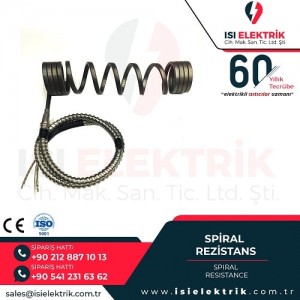
Spiral Rezistans Nedir?
Spiral rezistans, elektrikli ısıtma amaçlı kullanılan bir tür rezistans çeşididir. Rezistanslar, elektrik enerjisini ısı enerjisine dönüştüren elektriksel dirençlerdir. Spiral rezistanslar, genellikle boru içerisine yerleştirilen bir telin (genellikle nikel-krom alaşımı gibi yüksek dirençli bir malzeme) belirli bir desende sarılmasıyla oluşturulur. REZİSTANS-min.jpg)
Spiral Rezistans Çeşitleri
- Düz Spiral Rezistanslar: Bu tip rezistanslar, genellikle düz boru veya yüzeylerde kullanılır. Isıtma elemanı, düz bir desen içinde sarılır ve düz bir şekle sahiptir.
- Silindirik Spiral Rezistanslar: Silindirik rezistanslar, boru şeklindeki kaplarda veya silindirik yapıların içinde kullanılır. Spiral tel, silindirik yüzeye göre sarılır ve bu şekilde ısıtma sağlanır.
- Uzun Spiral Rezistanslar: Uzun spiral rezistanslar, genellikle endüstriyel fırınlar gibi büyük hacimli ısıtma sistemlerinde kullanılır. Uzun bir tel spiral şeklinde sarılır ve uzun bir alana yayılarak homojen bir ısıtma sağlar.
- Kompakt Spiral Rezistanslar: Bu tip rezistanslar, daha küçük alanlarda kullanım için tasarlanmıştır. Daha sıkı bir spiral sarımıyla yapılan kompakt rezistanslar, sınırlı alanlarda yüksek ısı üretimine izin verir.
- Dijital Kontrollü Spiral Rezistanslar: Gelişmiş teknolojiye sahip olan bu tip rezistanslar, sıcaklık ve güç seviyelerini dijital olarak kontrol edebilme yeteneğine sahiptir. Bu, daha hassas sıcaklık kontrolü sağlar.
- Paslanmaz Çelik Spiral Rezistanslar: Endüstriyel veya hijyenik uygulamalarda kullanılan paslanmaz çelik spiral rezistanslar, korozyona karşı dayanıklıdır ve temizlenmeleri kolaydır.
Spiral Rezistans Teknik Özellikleri
- Güç: 200 Watt ile 4000 Watt arasında değişebilir.
- Voltaj: 24 Volt - 480 Volt
- Isı Aralığı: 0°C - 600°C
- Gövde Malzemesi: Paslanmaz çelik, alüminyum, pirinç
- Isıtma Elemanı Malzemesi: Nikel krom, paslanmaz çelik, Inconel
- Yalıtım Malzemesi: Seramik, mika, teflon
- Boyut: Isıtılacak ortamın boyutuna ve şekline göre özelleştirilebilir.
- Bağlantı Tipi: Kelepçe bağlantısı, kablo bağlantısı, fiş bağlantısı
- Isıtma hızı
- Soğuma hızı
- Isı dağılımı
- Ömür
- Koruma sınıfı
- Montaj tipi
Spiral Rezistansların Avantajları
- Yüksek Verimlilik: Spiral rezistanslar, elektrik enerjisini doğrudan ısıya dönüştürürler, bu da enerjinin verimli bir şekilde kullanılmasını sağlar.
- Hızlı Isıtma: Spiral rezistanslar, hızlı bir şekilde ısınabilirler, bu da hızlı ısıtma süreleri ve daha hızlı işlemler sağlar.
- Geniş Kullanım Alanı: Spiral rezistanslar, çeşitli endüstriyel ve evsel uygulamalarda kullanılabilirler.
- Dayanıklılık: Spiral rezistanslar genellikle dayanıklı malzemelerden yapılmıştır ve uzun ömürlüdürler.
- Esneklik: Spiral rezistanslar, çeşitli boyutlarda ve şekillerde üretilebilirler.
- Kolay Montaj ve Bakım: Spiral rezistanslar genellikle kolayca monte edilir ve bakımı yapılır.
Spiral Rezistansı Üretiminde Kullanılan Malzemeler
- Isıtma Elemanı Malzemeleri:
- Nikel-krom Alaşımı: Genellikle spiral rezistansların ana ısıtma elemanı olarak kullanılır.
- Paslanmaz Çelik: Bazı özel uygulamalarda veya yüksek sıcaklık gereksinimlerinde tercih edilebilir.
- Inconel: Yüksek sıcaklık dayanımı gerektiren endüstriyel uygulamalarda kullanılan bir diğer malzemedir.
- Gövde Malzemeleri:
- Paslanmaz Çelik: Spiral rezistansların dış gövdeleri genellikle paslanmaz çelikten yapılmıştır.
- Alüminyum: Hafif ve ısı iletkenliği yüksek olan alüminyum, bazı uygulamalarda tercih edilebilir.
- Pirinç: Yüksek ısı iletkenliği ve maliyet etkinliği nedeniyle bazı spiral rezistanslarda gövde malzemesi olarak kullanılabilir.
- İzolasyon Malzemeleri:
- Seramik: Yüksek sıcaklık dayanımı sağlayan ve elektriksel izolasyon sağlayan bir malzemedir.
- Mika: Yüksek sıcaklık dayanımı ve elektriksel izolasyon sağlar.
- Teflon: Bazı özel uygulamalarda kullanılan bir diğer izolasyon malzemesidir.
Spiral Rezistansı Seçimi Teknik Detayları
-
Güç (Watt)
Isıtılacak ortamın boyutuna ve ısıtma gereksinimlerine bağlı olarak uygun güç seviyesini belirlemek önemlidir. Yetersiz güç, istenilen sıcaklığın sağlanamamasına neden olabilir.
-
Voltaj
Kullanılacak olan elektrik sisteminin voltajı, spiral rezistansın voltajıyla uyumlu olmalıdır. Voltaj uyumsuzluğu, rezistansın performansını olumsuz etkileyebilir ve güvenlik riski oluşturabilir.
-
Isı Aralığı
Spiral rezistansın çalışma sıcaklık aralığı, uygulamanın gereksinimlerine uygun olmalıdır. Özellikle yüksek sıcaklık veya düşük sıcaklık uygulamaları için uygun bir aralık seçilmelidir.
-
Gövde Malzemesi
Rezistansın gövde malzemesi, ısıya ve çevresel koşullara dayanıklı olmalıdır. Paslanmaz çelik gibi korozyona dayanıklı malzemeler tercih edilebilir.
-
Isıtma Elemanı Malzemesi
Isıtma elemanının malzemesi, yüksek ısıya dayanıklı ve uzun ömürlü olmalıdır. Nikel-krom alaşımı gibi malzemeler sıkça tercih edilir.
-
Montaj Tipi
Spiral rezistansın montaj tipi, uygulanacak ortama ve kullanım kolaylığına göre seçilmelidir. Kelepçe bağlantısı, flanş bağlantısı veya kablo bağlantısı gibi farklı montaj tipleri bulunabilir.
-
Uygulama Alanı
Spiral rezistansın kullanılacağı ortamın özellikleri (nem, kimyasallar, basınç gibi) göz önüne alınmalıdır. Bu faktörler, malzeme seçiminde ve teknik özelliklerde dikkate alınmalıdır.
-
Kontrol ve Güvenlik Özellikleri
Dijital kontrol özellikleri, aşırı ısınma koruması ve aşırı akım koruması gibi güvenlik özellikleri, spiral rezistans seçiminde önemli bir rol oynar.